Friday, September 10, 2010

2010 Programme Book Gift Bag

Finally connected up with my friend who picked up our tickets this year, and there was a programme book gift bag after all. One rumor I read said the bags were not given out when you picked up your programme book because they were held up at customs. When my friend went to pick up the completed order, bags were available, although he had to specifically ask for it. No word on whether any would still be left at this point.

Highlights of this year's bag:

  • A tote bag.

  • No Stella Artois glass! So much for my collection.

  • A small 237 ml bottle of Diet Coke.

  • A bag of Blockbuster popcorn.

  • A Crest 3DWhite teeth whitening strip.

  • A rent 1/get 1 free coupon for Blockbuster with post-its to bookmark your programme book.

  • A card advertising the Tim Burton exhibition organized by MOMA that will be at the Lightbox in November.

  • A card advertising 50% off the Toronto Star.

  • A Pizza Nova gift card.

  • An ad for TorontoFilmFestivals.com, which seems to list all the various film festivals around Toronto during the year.

  • A card advertising the Liberty Entertainment Group's restaurants, like the Rosewater Supper Club (no discount, though).

  • A Blockbuster gift card, although it doesn't say if there's any credit on it.

  • A scratch and win card for the Drake Hotel.

  • 3D glasses for the National Film Board of Canada's website (http://nfb.ca/3-D).


Inside Job

Inside Job is an intriguing look at the causes and the effects of the recent financial crisis. With narration by Matt Damon, and interviews with some of those that contributed to the problem and those who foresaw the results but went unheeded, director Charles Ferguson's film lays out the initial origins of the problem back in the 70's and 80's when deregulation of the financial industry began, moves through its expansion in the 90's and early 2000's, right up to the boiling point in 2008/2009. The film presents a clear explanation of collateralized debt obligations (CDOs) and credit default swaps (CDSs) and shows how they created a house of cards just ripe for a collapse.

Inside Job reminded me somewhat of Enron: The Smartest Guys in the Room, in that both films took a rather esoteric topic and made it understandable to a layperson, and highlighted how greed created a self-perpetuating cycle that piled more and more bad decisions on top of one another to the point that failure was inevitable. The film shows the intertwining connections between academia, government, and the financial services industry, with the same players moving back and forth between each of them, further entrenching the same principles that led to many of the problems.

Director Charles Ferguson, producer Audrey Marrs, and Gillian Tett, US managing editor of the Financial Times, did a Q&A after the film:

  • Ferguson's hope for the film is to be able to show the world these issues and hope it leads to action.
  • When asked about how they got people to interview for the film, Marrs said that in getting people, they gave them a brief synopsis of the film and Ferguson's CV, and she was surprised more people didn't ask for more information. She thinks that many thought they were going to them just for the expertise, and that they had never been challenged before. For those people that declined, they pushed really hard to get specific no's, as opposed to people just saying they were too busy and deferring.
  • Gillian Tett described that before moving to the editorial side, for 5 years she covered global markets, and she used to be frustrated at trying to take these complicated, specialized topics and ideas and communicate them to other people. It was an area of activity that was incredibly important to the global economy but very hard to communicate. She thinks the film does a good job of taking this geeky, complex stuff and communicating its core essence to a wider audience, and wishes there had been some version of this 5 years ago.
  • She continued that it is tempting to take a topic like CDOs, which seems dull and geeky and boring, and stick it on the back page. People would tend to say its geeky and boring, so leave it to the technical experts. And technical experts are not used to be questioned, because people aren't looking at what they are doing, so they are left alone and get on with their stuff, but we now know in finance that is dangerous.
  • She raised the question of how many other geeky areas of activity are there in society today where people are averting their eyes, like how many people knew what was happening in the Gulf of Mexico before the BP well blew up, and how many other areas is there a need for people to make serious films looking at these technical areas where experts are not used to being challenged?
  • Some interview subjects tried to back out afterwards, but they had all signed releases before doing the interviews. Ferguson got an e-mail from Martin Feldstein the day after the interview rescinding his permission, but they already had a signed release so they left the footage in; Ferguson had thanked his legal team before the start of the screening.
  • On the academic connection: Ferguson started in academia, has a PhD in political science from MIT, and did economic policy. He noticed some of his professors popping up as expert witnesses in antitrust cases or regulatory proceedings. Over time he kept in touch with academia, and has friends who are academics, and he noticed this became more prevalent, and once the crisis hit, he looked deeper, and found what you saw in film and much more. The Law and Economics Consulting Group, one of the firms mentioned in the film, is a $300 million a year publicly held company; overall, it is a billion dollar industry, and their website listed all the academic experts you could hire, and there are a lot of serious people
    on there.
  • When asked about the film's position that President Obama hasn't addressed the issue in more depth (and the film is fairly non-partisan in that both Republican and Democratic administrations alike get blame for contributing to the problem), Ferguson said that he doesn't know the President personally, but says once he made certain appointments for positions like the Secretary of the Treasury, the Fed, etc. the die was cast. He said
    he really doesn't know the answer to that, but in discussions with others, some people think it's actually contrary to the President's own political self-interest to do what he has done and probably had the capital to do much more.
  • Gillian Tett said she thinks President Obama was trying to to tackle many targets at once, and to reform the financial industry would require a strong, concerted focus, but the lobby is very powerful. Before becoming a journalist, she trained as a social anthropologist, and one of thinkers that had an impact on her was Pierre Bourdieu, the French anthropologist, who argued the way elites stay in power is not by controlling the means of production
    (i.e. money), but by controlling the cognitive map (how we think). This plays into Ferguson's point about the academic role in all this; academics were reinforcing and supporting a cognitive map that served the financial industry very well. There is a powerful nexus of thinkers, politicians, idea people, money men and women, who worked together in recent years to create the system.
  • Ferguson concluded by agreeing that the US political system has become more a servant of the financial service industry, but it's not irreversible, and the American people have in past come to realize similar problems in the system and asserted themselves, and thinks that the President has the capacity to do much more.
  • The film will be released this fall in North America.

Film Socialism

I can't really comment too much on this film. Everything I've read indicated that there should have been English subtitles (albeit ellipitical ones), but the version I saw at TIFF had none, and my French is extremely limited, so that made it even more difficult to interpret what I was seeing. Especially the middle section of the film, set at a small gas station, where there was a fair amount of dialogue.

If you're a fan of Godard's work, and/or you have a good working knowledge of French, consider seeing this, but otherwise, you may not get much out of the film.

Thoughts on Opening Day

Some random thoughts on day 1:

  • New trailers! RBC one was funny, but hope they have more in store, because it will get old fast. Cadillac seems to be going for iconic film images this year (Psycho!).

  • Liked the new volunteer trailer.

  • The Lightbox Tim Burton trailer was visually interesting. Have to checkout the exhibit when it comes to town.

  • The TIFF woman doing the intro for Film Socialism found it cute the audience remembered the arrrrrr for her anti-piracy spiel.

  • Speaking of Film Socialism, what was up with the 30 minute delay? Heard conflicting reasons for the delay, from the projectionist being late to the film itself being late. And were there supposed to be subtitles? The few reviews from Cannes I've read seem to imply that there should've been (although they probably wouldn't have helped me interpret the movie any better).

  • Inside Job was a fascinating look at the causes and impact of the financial crisis, and does a good job explaining collateralized debt obligations, credit default swaps, and how they led to the whole financial mess. Took a fairly non-partisan view in the sense that both Republican and Democratic administrations alike take blame, along with the major players in the financial industry and academia. Director and producer were in attendance, and did a Q&A which I'll post a summary of when I get a chance.

Saturday, September 04, 2010

My TIFF 2010 Fest Schedule

Got my tickets for this year:

Friday, September 03, 2010

Individual Tickets Now On Sale

Individual tickets to screenings are now on sale:

Online at http://www.tiff.net/, starting September 3, 2010 at 7:00 AM

At the Festival Box Office at 363 King Street West (King and Peter Streets) or by phone at (416) 968-FILM or 1-877-968-FILM:

  • September 3: 7:00 AM to 7:00 PM
  • September 4 to September 8: 10:00 AM to 7:00 PM
  • September 9 to September 18: 7:00 AM to 7:00 PM
  • September 19: 7:00 AM to 5:00 PM
The website is pretty unresponsive at the moment.

Monday, August 30, 2010

TIFF 2010: Box 9 out of 39 Drawn

In this year's ticket lottery, there were 39 boxes, and box 9 was selected as the starting point. This means all orders that were dropped off in box 9 will be processed first (after donors are processed), then box 10, 11, 12, etc., up to 39, after which boxes 1 through 8 will be processed.

If you filled out an e-mail address on your Advance Order Book and your envelope, you should get an e-mail between now and September 2, letting you know which of your choices were filled; for any that weren't you will receive vouchers that you can use starting September 2 to select a different screening. Don't panic if you don't receive an e-mail, a number of people every year don't.

You can pick up your tickets or vouchers starting on September 2, 2010 at 7:00 AM at the Festival Box Office at King and Peter. If you actually got all your choices, I recommend you do not show up first thing at 7:00 AM, as the lines will likely be long.

For all those that did not participate in the advance order procedure this year, general tickets go on sale starting September 3.

Sunday, August 29, 2010

Advance Order Books Due Tomorrow

Just a reminder, Advance Order Books have to be returned before 1:00 PM on Monday, August 30, 2010 to the Festival Box Office at King and Peter. If you miss the deadline, then your order will be processed after everyone else in the lottery.

Your Advance Order Book should be in the order envelope you received at pickup, and the envelope should include your Drop Off Voucher. Keep your Pick Up Voucher, as you will need that to pick up your tickets.

Don't forget to also fill out your e-mail address on both the envelope and the cover of the Advance Order Book, so the festival can notify you of which tickets you will receive.

If your 1st and 2nd choice for a screening were sold out, then you will receive a voucher at pick up that can be used to pick and pay for another screening, which you can pick as soon as September 2, 2010.

For a more detailed explanation of what happens in the lottery, consult my post here.

Saturday, August 28, 2010

TIFF 2010 Programme Guide Tote Bag

I've heard that the reason that purchasers of the programme guide did not get tote bags at envelope pick up this year is that all the contents were ready to go, but the bags themselves were held up in customs at the border. No word on exactly when the bags might be available.

The Whistleblower

While scheduling films, my friend noticed that the Rachel Weisz film, The Whistleblower, is listed on the website and the Official Film Schedule, but is not in the programme book. So if you're strictly looking at the programme book when picking films, don't forget to look this one film up off of the website.

Tuesday, August 24, 2010

Actors, Directors, and Others Attending TIFF 2010

The list of actors, directors, and others attending or expected to attend the festival has been announced. The full list can be found here.

Some highlights below:

  • Ben Affleck
  • Malin Akerman
  • Woody Allen
  • Darren Aronofsky
  • Gemma Arterton
  • Javier Bardem
  • Jay Baruchel
  • Maria Bello
  • Danny Boyle
  • Zach Braff
  • Catherine Breillat
  • Abigail Breslin
  • Jim Broadbent
  • James Caan
  • John Carpenter
  • Vincent Cassel
  • Thomas Haden Church
  • Jennifer Connelly
  • Steve Coogan
  • Paolo Costanzo
  • Denis Côté
  • Marion Cotillard
  • Matt Damon
  • William B. Davis
  • Robert De Niro
  • Catherine Deneuve
  • Kat Dennings
  • Laura Dern
  • Garrett Dillahunt
  • Xavier Dolan
  • Minnie Driver
  • Clint Eastwood
  • Aaron Eckhart
  • Atom Egoyan
  • Emilio Estevez
  • Vera Farmiga
  • Will Ferrell
  • Colin Firth
  • Megan Fox
  • James Franco
  • Stephen Frears
  • Vincent Gallo
  • Ed Gass-Donnelly
  • Bill Gates
  • Zach Galifianakis
  • Paul Giamatti
  • Amos Gitai
  • Ryan Gosling
  • Bruce Greenwood
  • José Luis Guerin
  • Davis Guggenheim
  • Sturla Gunnarsson
  • Michael C. Hall
  • Rebecca Hall
  • Jon Hamm
  • Woody Harrelson
  • Josh Hartnett
  • Amber Heard
  • Jill Hennessy
  • Werner Herzog
  • George Hickenlooper
  • Philip Seymour Hoffman
  • Bob Hoskins
  • Alejandro González Iñárritu
  • Irène Jacob
  • Jason Jones
  • Milla Jovovich
  • Catherine Keener
  • Harvey Keitel
  • Nicole Kidman
  • Rachelle Lefevre
  • Mike Leigh
  • Blake Lively
  • Ken Loach
  • Jon Lovitz
  • Josh Lucas
  • William H. Macy
  • Guy Maddin
  • Amy Madigan
  • Bruce McDonald
  • Helen Mirren
  • Michael Moore
  • Errol Morris
  • Temuera Morrison
  • Carey Mulligan
  • Bill Murray
  • Steve Nash
  • Olivia Newton-John
  • Alessandro Nivola
  • Edward Norton
  • Jonathan Nossiter
  • Clive Owen
  • François Ozon
  • Ellen Page
  • Molly Parker
  • Ron Perlman
  • Ryan Phillippe
  • Rosamund Pike
  • Freida Pinto
  • Amanda Plummer
  • Christopher Plummer
  • Natalie Portman
  • Kelly Preston
  • Bill Pullman
  • Om Puri
  • Charlotte Rampling
  • Robert Redford
  • Keanu Reeves
  • Jeremy Renner
  • Ryan Reynolds
  • Miranda Richardson
  • Emma Roberts
  • Sam Rockwell
  • Stephen Root
  • Mickey Rourke
  • Geoffrey Rush
  • Amy Ryan
  • Ludivine Sagnier
  • John Sayles
  • Julian Schnabel
  • David Schwimmer
  • Kristin Scott-Thomas
  • Martin Sheen
  • Michael Sheen
  • Sarah Silverman
  • Kevin Spacey
  • Scott Speedman
  • Bruce Springsteen
  • Mary Steenburgen
  • Fisher Stevens
  • Emma Stone
  • David Suzuki
  • Hilary Swank
  • Juno Temple
  • Uma Thurman
  • John Turturro
  • Tom Tykwer
  • Liv Tyler
  • Ingrid Veninger
  • Denis Villeneuve
  • Apichatpong Weerasethakul
  • Rachel Weisz
  • Lambert Wilson
  • Rainn Wilson
  • Ray Winstone
  • Michael Winterbottom
  • Dwight Yoakam

How Do I Buy Tickets for TIFF 2010 - Part 4

This is the fourth in a series of posts on how to buy tickets for the Toronto International Film Festival (TIFF). In this post, we'll look at ways you can purchase tickets while the festival is underway.

You can purchase tickets in advance (i.e. not on the same day of the screening) by the following methods:


Online at http://www.tiff.net/, starting September 3, 2010 at 7:00 AM

At the Festival Box Office at 363 King Street West (King and Peter Streets) or by phone at (416) 968-FILM or 1-877-968-FILM:

  • September 3: 7:00 AM to 7:00 PM
  • September 4 to September 8: 10:00 AM to 7:00 PM
  • September 9 to September 18: 7:00 AM to 7:00 PM
  • September 19: 7:00 AM to 5:00 PM

On the day of the screening, in addition to the above methods you can also purchase tickets at the venue box office; i.e. the box office located at each theatre showing films for the festival. Venue box offices usually open one hour before the first scheduled screening of the day at that theatre, and close 30 minutes after the last scheduled screening of the day at that theatre.

In 2009, ticket prices were as follows:

  • Regular Public Screenings - $19.76, Student/Senior - $17.14 (in person only, same-day sales only)
  • Premium Public Screenings - $38.33, Student/Senior - $19.05 (in person only, same-day sales only)
  • Children’s Tickets for Sprockets Family Zone programming only - Child (12 and under) - $12.86

Prices do not include HST, building-fund fee, or service charges. You can pay by cash, debit, or Visa.

You can usually purchase a maximum of 4 tickets to a single screening. All sales are final; to exchange tickets, there is a $2.50 fee per ticket, and you can only do exchanges up to the day before the screening (i.e. no same day exchanges allowed). Exchanges can usually only be performed at the Festival Box Office.

For Student and Senior (+65) discounts, you need to present your ID with your ticket when entering the screening.

If a particular screening is marked as Off Sale, i.e. sold out, then keeping trying throughout the festival. People may exchange their tickets for other movies, and those originals are then released back for sale.

Additional tickets may also be made available the day of the screening, so try checking then. The TIFF website will list their "best bets" for same day tickets available on the following day, on the website, and through e-mail if you subscribe to their TIFF Alerts.

Try a different screening. Screenings early in the week tend to sell out faster than those later in the festival.

Try checking the forums at TIFF Reviews, at http://www.tiffreviews.com/forum/. People will often post if they are looking to trade their tickets.

If all else fails, you can try the rush line outside the theatre screening your film. If any last minute seats open up, because someone doesn't show up for their screening, or seats reserved for people associated with the film aren't all filled, the theatre may release those seats. People in the rush line will get first crack at purchasing any seats that come available (sales are usually cash only, so make sure you have enough on you). Note there is no guarantee anyone in the rush line will be able to get in.

On occasion, ticket holders that don't want to see the film or that have extra tickets, may go down the rush line offering their extras; I've been on both ends of this before, where I've sold my ticket to someone in the line, or been in the line and bought a ticket off of someone looking to sell.

Some tips for the festival:

  • Make sure you are in the right line. Ask festival volunteers (the ones with the headsets or festival t-shirts) what line you should be in. Multiplexes like the AMC will have multiple films lining up at the same time, so you want to make sure you are in the right one. Plus, each theatre has a rush line as well, which is for people who still want to buy tickets, not those who already have one.
  • Be at the theatre at least 15 minutes before the start of the screening, otherwise you are not guaranteed a seat, even if you have a ticket. If you arrive more than 10 minutes after the scheduled start of a movie, they may not let you in.
  • Not all theatres allow food and/or drink. The Varsity, AMC, and Scotiabank theatres allow food/drink since they are all part of the big theatre chains, but other theatres like Ryerson do not. So don't buy take-out or a big coffee right before you go into one of those.
  • Don't leave empty seats next to you. Squeeze in, because generally speaking, every film will be playing to a packed house. Note the festival also says you aren't allowed to save seats in the theatre.
  • Be aware of where you sit if you are watching a subtitled movie. Not all theaters have good sight lines to the bottom of the screen.
  • If you have limited time between screenings, don't forget all the factors that might affect you: many screenings will have a Q&A after the movie, and the time for any Q&A is not factored into the screening time in the schedule (you're not obliged to stick around for the Q&A, though); films will occasionally start late for a variety of reasons; some theatres are far apart from one another.
  • If you're watching a Midnight Madness film at midnight, don't forget that the subway may not be running by the time the film ends, so plan accordingly.
  • Speaking of Q&As, if you're going to speak up, make sure you actually have a question or keep it short. No one else wants to hear you gush over the director or cast for 5 minutes, no matter how good the film was. If you want to do that, try to catch them after the Q&A is over. In a similar vein, it generally does not go over well if you want to spend your question severely criticizing the director without anything constructive to say or ask.
  • Don't forget to turn off your cell phone, and for pete's sake, don't text or talk through the movie (especially if you're in the industry; the rest of us don't care how much of a Hollywood bigshot you are :-))
  • It should go without saying that you shouldn't be taping movies, but in case that's not obvious, I've been at a number of films where they've had people scanning the audience during the screening, with and without night-vision goggles. Also note that taping movies is now a criminal offense that could net you 2 years in prison.
  • Be nice to the volunteers; they don't get paid for this (other than getting a ticket from whatever is still available after having worked for several hours in a row). Just think about how much *more* expensive the festival would be without them. :-)

If you want a really detailed breakdown of tips of what to do during the festival, check out Larry Richman's series of posts, the first of which is linked below:

http://www.pronetworks.org/index.php/independent_films/post/how_to_do_the_toronto_film_festival_-_real_tips_for_real_people/

How Do I Buy Tickets for TIFF 2010 - Part 3

This is the third in a series of posts on how to buy tickets for the Toronto International Film Festival (TIFF). This post describes some strategies and considerations for selecting which films to see.

There's no one right way to pick which films to see at the festival; it's a very personal choice based on your own interests and personality. This post provides some different ways you can wrangle the huge number of films into something more manageable that appeals to you.

Ways of Selecting Films

Some of the ways you can focus in on particular films include:

  • Director
  • Actor
  • Writer
  • Genre
  • Country
  • Festival programme
  • Festival programmer
  • Story, plot, or characters
  • Timeslot
  • Theatre

Director, actor, and writer are fairly self-explanatory. I've met people who will jump at the chance to see the latest Werner Herzog film, for instance. Others want to see Brad Pitt or Patricia Clarkson.

Some people like to focus on a particular genre or span genres. For example, I usually try to see a dramatic film, a documentary, something comedic, something animated, something character-driven, and something with some action at a minimum (but not necessarily in one single film). I don't generally go out of my way to watch something historical, but I do usually seek out something contemporary.

I also like to see films from a number of different countries. At a minimum, I usually see something from Canada, France, Japan, and Scandinavia. I then usually end up with others from the US, South America, Europe, Asia, and Africa.

For festival programme: the films in the festival are divided up amongst a number of different programmes:

  • Canada First!: focuses on new and emerging Canadian filmmakers who are making their first appearance at the festival.
  • Canadian Open Vault: features iconic, recently restored Canadian film.
  • City to City: this programme contains films and documentaries focusing on a single city, this year being Istanbul.
  • Contemporary World Cinema: films from around the world.
  • Discovery: features new and emerging filmmakers from around the world.
  • Gala Presentations: high profile Canadian and international films.
  • Masters: films by established and renowned filmmakers.
  • Mavericks: discussions with people in the film industry. In the past, I've attended panels on Indian cinema, Nick Park discussing Wallace and Gromit, and Larry Charles and Bill Maher talking about Religulous while it was still in production.
  • Midnight Madness: films that are outside the normal festival boundaries, such as thrillers, horror, and cult films.
  • Real to Reel: documentaries.
  • Short Cuts Canada: Canadian short films, all under 50 minutes in length.
  • Special Presentations: films with major stars and/or directors from around the world.
  • Sprockets Family Zone: children's films.
  • Vanguard: films with a younger feel that push social and cultural boundaries.
  • Visions: films that stretch the boundaries of conventional cinema, using new techniques, territory, and/or technologies.
  • Wavelengths: experimental film and video art.

There are some people who just want to see everything in the Midnight Madness or Wavelengths programmes, and others who pick and choose from all over (I'm in the latter category). Note that if you bought one of the "My Choice" packages, you can select films from any of the programmes, provided the screenings are Regular Public screenings and not Premium screenings. Even though there are specific packages for Wavelengths, Midnight Madness, and City to City, you aren't required to have one of those to see the films in those programmes; you can still use your "My Choice" package or buy individual tickets.

There are separate programmers for each programme in the festival, and those people have become quite well-known over the years to regular festival goers. Each person has their own personality, and over time you can grow to like a particular person's style and choices, and dislike those of others. If you read the description of a film in one of the official sources such as the programme book or the festival website, you'll find that each is written by a different programmer.

Some people will see a film based on the person who programmed it. Some people such as myself find that some programmers' descriptions of the films are more representative than those by others. As such, the programmer and their description of the story, plot, or characters can be a factor for some in selecting films.

Selecting by timeslot can be an alternative if you have limited time to attend the festival. For instance, if you're unlike crazy people like myself who take vacation to attend the festival, then you may only have time during weekday evenings or weekends. As a result, you may end up trying to choose from whatever films happen to be screening on a Tuesday evening.

I have a friend who also occasionally considers the theatre when selecting films. If he finds himself already seeing a number of films in a single theatre (e.g. the Scotiabank or the AMC), he will often schedule in other films in that same theatre to eliminate having to travel from theatre to theatre, especially if there is limited time between movies.

Considerations When Selecting Films

Some things to remember when selecting films:

  • Each film usually screens multiple times during the festival. If you can't get into the first screening, try one of the other ones.
  • Films may not start or end on time, so build some contingency into your schedule.
  • Times in the festival schedule do not include time for Q&A sessions after the film if the director or actors are present, and depending on the film, this can last from 15 to 30 minutes.
  • Don't forget to account for travel time between theatres, as some are far apart from one another.
  • If you have children, check the film rating before buying a ticket. The Ontario Film Review Board lists the different film classifications and who can get in. Note that many films are unrated, and as such, you must be over 18 to attend, and that includes infants and toddlers.
  • You are not guaranteed entry if you arrive within 15 minutes of the film start time, and if you are more than 10 minutes late, you definitely won't be let in.

Sources for Film Selection

Some valuable sources that can help you decide which film to see are listed below:

  • Film listing at the official festival website (http://www.tiff.net/thefestival/filmsandschedules/films?filter=ABC)
  • Festival programme book (can be purchased for $32.00)
  • TOfilmfest.ca (http://tofilmfest.ca/) has films sliced and diced by title, director, actor, language, country, programme, classification, and review rating, with links to IMDB, trailers, and critical reviews, and the ability to search cinema sources for more information.

Scheduling Your Festival

If you are participating in the Advance Order Procedure with one of the "My Choice" ticket packages, or just buying individual tickets for multiple films, then choosing films in a given timeslot can make it easier to create your schedule. For example, a friend and I usually attend the festival and see about 60 films between the two of us. We'll see the majority of films together, and some separately depending on our interests. It can get extremely complicated trying to schedule that many films since each screens multiple times on different days.

What we usually do is rank every film in the festival from 1 to 5, with 1 being something we don't want to see at all, 3 is something I could take or leave, and 5 being something I want to see no matter what. We then start with scheduling all the 5's regardless of whether we both want to see the film or not, then 4's that we have in common, then 3's, and then we fill out the rest individually until we've used up all our tickets.

Every time we schedule a particular screening, we try and find one that doesn't conflict with any choices we've already made. Often times a conflict will occur, in which case we have to find a different time for the film, or reschedule something we've already chosen. This can be a very time consuming process; it usually takes my friend and I anywhere up to 8 hours to complete the process. Often times, we will run into a situation where it is impossible to see a film because there are no screenings available that don't conflict with other films we want to see more.

If you are only picking movies for yourself or are seeing 10 or less, this likely won't be a major problem for you. However, you should always consider backups in case your primary choice is sold out. This is true both if you are buying individual tickets or doing the Advance Order Procedure. It is extremely common for people to go to the box office, try to buy a ticket for a specific film, find out it's sold out, then spend a long time trying to find an alternative movie because they haven't taken the time to figure out what else they might want to see. This has the side effect of tying up the box office and creating long lines, and frustrating every one else. Plus, the longer you take trying to find an alternative choice, the more likely it is that your eventual alternate may be sold out to other people at the box office or buying online. Also note that there is a $2.50 fee to exchange a ticket, so choose wisely.

How Do I Buy Tickets for TIFF 2010? - Part 2

This is the second in a series of posts on how to buy tickets for the Toronto International Film Festival (TIFF). This post describes how the Advance Order Procedure works. This post has been updated for the 2010 process.

You can participate in the Advance Order Procedure if you buy one of the following "My Choice" ticket packages:

  • 50-Film Pack
  • 30-Film Pack
  • 25-Film Daytime Pack
  • 15-Film Daytime Pack
  • 10-Ticket Flex Pack

When you buy one of these packages, you should receive in the mail an Envelope voucher, a Drop Off voucher and a Pick Up voucher, provided you bought before August 6, 2010 (if you didn't you will have to pick them up from the Festival Box Office). If you bought a Programme Book, you will also receive a voucher for that as well. The Programme Book is a large book with a detailed description and photo for each film in the festival. It is not necessary to buy this book to complete the Advance Order Procedure, as all the information is available in other formats and on the festival web site, but it is convenient to flip through offline, plus it makes a nice souvenir.

A picture of previous Programme Books is below:


And here's what the book looks like inside:


Starting at 7:00 AM on August 24, 2010, you can go to the Festival Box Office at 363 King Street West (King and Peter Streets) to pick up your order form. Note that on the first day there will be a line, and it can take over 45 minutes to get through it, especially if you show up first thing in the morning, so plan your day accordingly. Note you don't actually have to line up first thing on the 24th, as you can pick up your order form at any time after that as long as the completed form is returned before 1:00 PM on August 30, 2010.

If you don't live in Toronto and bought the Courier Film Selection Service, the festival will send everything to you via FedEx; note you must return your completed order by FedEx by August 27, 2010, 5:00 PM local time.

If you go to the box office in person to pick up your order, before getting in any line, track down the festival volunteer usually at the head of the line, and verify that the line is the correct one for you to be in (you can identify the volunteers by their headsets or festival t-shirts). The festival doesn't always have someone at the end of the line telling people what the line is for. There will likely be at least two lines; one for order form pickup, and one for people to buy ticket packages or get their vouchers if they didn't receive them in the mail.

Make sure you have your Envelope voucher (and optionally your Programme Book voucher) with you when you go to pick up the order form. You will not be able to get anything without the vouchers. When you get to the front of the line, turn in those vouchers and make sure you receive an order envelope, the Advance Order Book, and a copy of the Official Film Schedule, as you will need all three to complete your order.


It used to be that if you bought a programme book, then while supplies lasted, you would get a tote bag filled with a number of promotional items and the programme book. This year they were not giving out tote bags, but apparently you get something later in the process (e.g. maybe on ticket pickup), but that's not entirely clear yet. Check this post (http://tifftalk.blogspot.com/2009/08/2009-programme-book-gift-bag.html) for details on what was in the 2009 tote bag.

So, the next step is to fill out the order. Make sure you have the following:

1. The Official Film Schedule.

2. The Advance Order Book:


3. A highlighter; this is optional, but does help to make your choices more visible to the ticket processors.

Let's consider an example where you want to see the film Windfall on one of the days of the festival, with a couple of friends of yours. The Advance Order Book looks as follows:


First, write the number of tickets you want in the box labeled "Qty" next to the name of the film. In this example, we want 3 tickets (because it will be yourself plus two friends). This will represent your first choice for this timeslot.

Next, highlight the name and time of the film with a highlighter, or circle them (either is fine). Do NOT highlight or obscure the barcode.

Next, find a film around the same time that will be your backup choice if your first choice is already full when they get around to processing your order form. Note this step is optional. If you do not specify a backup film and your first choice is full, you will receive a ticket voucher which you can redeem at a later date for another film at the festival. There is no fee to exchange tickets, provided you are participating in the Advance Order Procedure.

In this example, Poetry will be the backup choice. Below the entry for Windfall, in the 8 boxes next to the "2nd", write the 8-character event code for the 2nd choice film. In this case, the event code for Poetry is is 091018F2 (it's the code next to the film's title). Also write in the name of the backup movie in the "Title" box below the "2nd" boxes. Note that you cannot specify a different number of tickets for the backup; the festival will in this example assume you still want 3 tickets for the 2nd choice. Do not highlight the backup choice or fill in anything in that film's entry.

Your form should look as follows:


Repeat this process until you run out of coupons or choices. For example, if you ordered a 10-ticket Package, and you wanted 2 tickets for each film, you would select 5 1st choice films and optionally, 5 2nd choice backups.

Note the restrictions on your particular package when selecting films, to ensure your order is processed correctly:
  • 50-Film and 30-Film Packs: maximum of 1 ticket per screening.
  • 25-Film and 15-Film Daytime Packs: maximum of 1 ticket per screening beginning before 5:01 PM.
  • 10-Ticket Flex Pack: maximum of 4 tickets per screening, per account.

Note in all cases, you can select only Regular public screenings, not Premium screenings. In the Official Film Schedule, Premium screenings are indicated by 4 stars on the right-hand side of the timeblock for the screening.

In the example below, there are six Premium screenings shown. For old-timers, it is important to note that Premium screenings can now occur in theatres other than Roy Thomson Hall and the Visa Screening Room. In this example, there are Premium screenings at Ryerson and at Isabel Bader.


The Advance Order Book should not contain any listings for Premium screenings, but it's worthwhile double checking as you fill your schedule out.

You can place all your choices in a single Advance Order Book, regardless of how many passes or packages you bought. If you bought 3 10-ticket Packages, then all 30 1st choices and all 30 2nd choices can go in the same book.

For any tickets that you choose not to use in the Advance Order Procedure, or any choices that can't be filled because the film is sold out, you will receive vouchers that you can use towards other films with availability. You can do this alternate selection on September 2 when you pick up your completed order, or during the festival itself.

When selecting films, don't forget to account for the following:

  • Films may not start or end on time.
  • Times in the schedule do not include time for Q&A sessions after the film if the director or actors are present.
  • You should account for travel time between theatres, as some are far apart from one another.

Once you have finished picking your films and filling out the Advance Order Book, ensure you fill out the information on the cover of the Advance Order Book. If you want the festival to call you in the event of any difficulties regardless of the time of day or night, you could place a note on the form, but that's not a guarantee the festival will call. Note they process orders around the clock, so they could call you in the middle of the night if you so note. Ensure you fill out your e-mail address (and make sure it's readable) if you want to receive an e-mail notification once your order is filled.

Once you have filled out that information, place the completed Advance Order Book in the envelope you received when you picked up your form:


Fill out the "Total Number of Tickets Requested in this Order" box at the top right of the envelope. If you have 3 10-film packages, then you would write 30 in this box.

Fill out the contact information on the envelope. If you include an e-mail address, then the festival should notify you by e-mail which of your choices were filled and which were not when they have finished processing your order. If you bought the package for someone else, ensure their name is also included on the form in the spot provided.

Take the Drop Off Voucher that you should have received in the mail a while ago and place it in the envelope window. Do NOT include the Pick Up Voucher; you need to keep that to pick up your completed order starting September 2, 2010 at 7:00 AM at the festival box office.

Do NOT seal the envelope; leave the flap open or tuck it in, but do not seal it.

Drop off the envelope at the Festival Box Office before 1:00 PM on August 30, 2010. If you do not turn in your envelope by 1:00 PM, then you will miss the lottery, and your form will be processed after everyone else's.

The festival staff then spends the time from the 30th to the 1st processing orders. You can then line up at the festival box office any time from September 2 at 7:00 AM onwards to pick up your completed forms and see what movies you received. Take your Pick Up vouchers with you to exchange them for your processed orders. If you receive an e-mail from the festival saying you got all your choices, then I would recommend that you do NOT show up first thing in the morning, as there will be long wait (Shannon the Movie Moxie spent 6-1/2 hours in line in 2007 to get her orders and make alternate selections). If you didn't receive all of your picks, then you should line up in the morning, as you will receive ticket vouchers in place of your missed picks. You can then move to another line to immediately use those vouchers to pick other films that are still available; alternatively, you can wait to use those vouchers during the festival.

Now, why don't you need to speed through getting your Advance Order Book completed as soon as possible? Because the festival has a lottery system to determine from what point they start processing orders. Therefore, there is no inherent benefit to getting your order forms returned early. Here's how the system works:

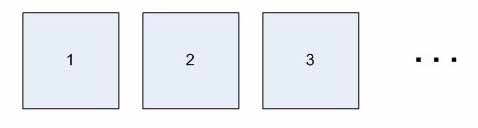
1. The festival starts with a whole bunch of empty boxes, numbered sequentially.
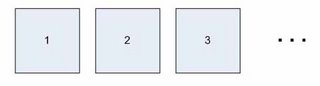


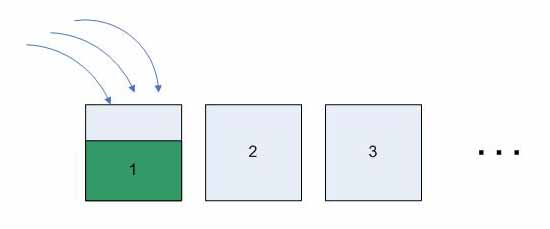
2. As people turn in their order forms, the forms are placed in the lowest numbered box that has room:
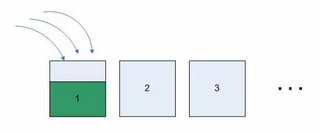


Here we can see completed forms being placed in box #1.

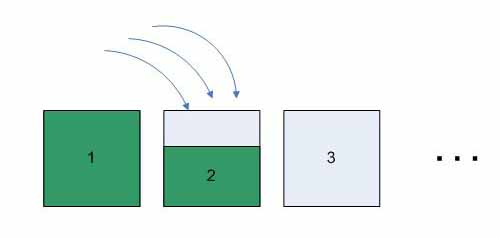
3. Once a box is full, forms are placed in the next available box, in this case box #2:
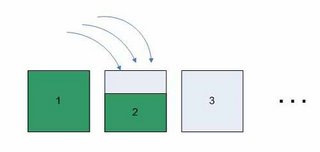


4. And once that box is full, they move to the next one, in this case box #3:
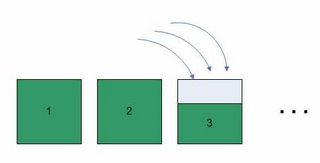


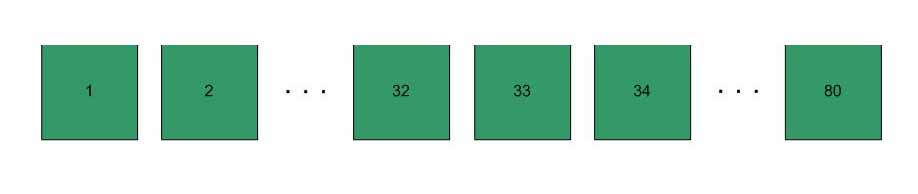
5. Once all forms have been received by the deadline, the festival has a bunch of filled, numbered boxes:


6. They then randomly draw a number from 1 to whatever the highest number box they have, in this example, 80. The number drawn represents the box number from which the festival starts processing orders. Assume for this example that 33 was the number drawn:


The festival starts processing the forms in box #33. Once they have processed all the forms in the box, they move to the next one in numerical order, in this case #34. They continue until they reach the highest numbered box, here #80. Once they finish with that box, they loop back around to box #1 and start moving upwards, until they reach the box one number before the one drawn (#32). The festival usually sends e-mails out letting you know which of your choices you have gotten.

At this point, all advanced orders have been processed and will be ready for pickup. In this example, if you were lucky enough to be in box #33, you would've gotten all your picks. But if you were in box #32, you probably won't get a lot of your picks. In that case, for each pick that wasn't fulfilled you typically receive a voucher which you can use to select a film from whatever still has tickets available. You can use vouchers coupons any time during the duration of the festival.

Festival patrons that donated at least $300 to the festival get processed before the other boxes mentioned above. And even amongst donors, the ones who contributed more money get priority over other donors.

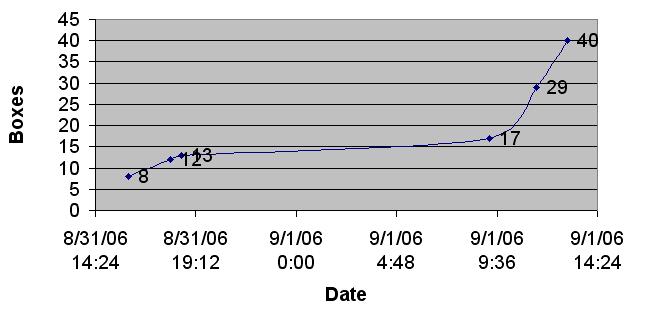
Just for interest, the graph below gives you an idea of when people submitted their order forms in 2006:
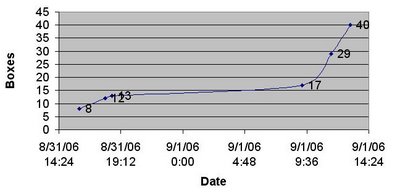


The bulk seemed to drop their forms off in the final three hours or so before the deadline. In 2007, box 66 out of 75 was randomly drawn as the starting point. My friend and I had forms in boxes 21 and 49, and we didn't get only 3 out of the 60 films we selected (but then we didn't pick many big name films).

The next post in this series will talk about some of the different ways people pick the films they want to see, and some considerations around scheduling. The post after that will discuss what you actually do during the festival when you get to your screening, along with options if you couldn't get tickets in advance.

New Changes for 2010

A few interesting things to note this year from looking at the ticket package:

  • Unlike what Google Maps indicates, the Festival Box Office is at the southwest corner of King and Peter Streets (Bing Maps gets it right).
  • Premium screenings are indicated in the Official Film Schedule by 4 stars on the right-hand side of the timeblock for the screening.
  • The instructions clearly state you can only use vouchers for Regular public screenings and not Premium screenings, so don't pick the Premium screenings in your selections. It looks like the Advance Order Book does not include the Premium screenings.
  • Premium screenings can occur in any theatre, not just Roy Thomson Hall and the Visa Screening Room. For example, Ryerson and Isabel Bader now have Premium screenings.
  • In the general policies, it specifies that you cannot save seats inside the theatre. I don't remember seeing that explicitly mentioned before, and it will be interesting to see how aggressively they enforce that.
  • In previous years, if you bought a Programme Book, you received a tote bag filled with goodies when you picked up your order form. Apparently this year you only receive something later (probably when you pick up your completed order, but I'm not clear on how they will know which people bought Programme books and which didn't, which used to be the determining factor in getting a bag).

The Advance Order Book looks similar to last year's, so the process should be the same as in 2009, but I'll be updating my ticketing guide shortly.

Monday, August 23, 2010

Ticket Package Pickup Tuesday

For those that ordered one of the My Choice ticket packages, you will be able to pick up your order forms starting tomorrow, Tuesday, August 24, 2010, at 7:00 AM. Go to the Festival Box Office at 363 King Street West; the box office hours are 7:00 AM - 7:00 PM on August 24th, and 10:00 AM - 7:00 PM from August 25th to September 1st.

Note you do not have to line up early at the box office; once you pick up your order form, you have until 1:00 PM on Monday, August 30 to return your completed form.

If you purchased your My Choice package before August 6, you should have already received vouchers in the mail. If you ordered after August 6 or haven't received your vouchers yet, then simply go to the box office starting August 24th to pick them up; ensure you have photo ID with you.

If you received your vouchers in the mail, then you should have gotten the following:

  • An envelope voucher
  • A dropoff voucher
  • A pickup voucher
  • A programme book voucher, if you purchased a programme book. Note that this book is not necessary to complete the Advance Order Process.

Bring your envelope voucher and any programme book vouchers with you when you first go the box office. The programme book voucher, if you have one, can be exchanged for a programme book. The envelope voucher is exchanged for the Official Film Schedule, an Advance Order Book, and an Order Envelope.

You then use the Official Film Schedule to find the films you want to see, and fill out the Advance Order Book with your choices. The completed Advance Order Book and your dropoff voucher then go into the Order Envelope, and you return them to the Festival Box Office before 1:00 PM on Monday, August 30, 2010. Do not include the pickup voucher in the envelope; you need to keep that so you can pickup your actual tickets starting September 2.

Note you do not have to rush to hand in your completed order form. The festival uses a lottery system as opposed to a first-come-first-served system. You just have to ensure you hand in your completed form before the deadline mentioned above. For more information on how to fill out your order form, consult the How Do I Buy Tickets for TIFF links at the top of the page. These links will be updated for 2010 once I see the new order form, but the overall process doesn't change too much from year-to-year.

After 1:00 PM on August 30th, the festival will start processing orders and will e-mail confirmations of your selections that could be filled. For any selections that could not be filled, you will receive vouchers back that you can use to select different films.

Starting Thursday, September 2, 2010, you can pick up your completed order form, make new selections for any vouchers you get back or make exchanges on selections that were filled. Ensure you bring with you your pickup voucher that you originally received in order to pick up your tickets.

If you purchased a TIFF Choice package, i.e a package in which the festival picks films for you, you can pick up your tickets starting Thursday, September 2, 2010. Until then, you don't have to do anything.

If you haven't bought any ticket packages to date, you can still purchase any available TIFF Choice packages, or you can buy individual tickets when they go on sale Friday, September 3.

One note: 363 King Street West is *not* the new Bell Lightbox; it should be at the southwest corner of King and Peter Street.

Tuesday, August 03, 2010

2010 Ticketing Update - August 3, 2010

As of August 3, 2010, the following packages are sold out:

  • Student One Day Pass - Friday, September 10
  • Student One Day Pass - Saturday, September 11
  • Student One Day Pass - Sunday, September 12
  • Student One Day Pass - Monday, September 13
  • Student One Day Pass - Tuesday, September 14
  • Student One Day Pass - Wednesday, September 15
  • Student One Day Pass - Thursday, September 16
  • Student One Day Pass - Friday, September 17
  • Student One Day Pass - Saturday, September 18
  • Student One Day Pass - Sunday, September 19
  • Visa Screening Room Weekend Evening 3-Pack: films at the Visa Screening Room on September 10, 11, and 12 at 6:00 PM
  • Visa Screening Room Weekday Evening 3-Pack: films at the Visa Screening Room on September 13, 14, and 15 at 9:00 PM
  • Double-Date Gala Pack: 8 tickets to 2 gala screenings at Roy Thomson Hall.

Thanks to The Coil for noting that the 15-Film Daytime pack is available again.

All the other ticket packages are still available.

The festival also has a tool to make it easier to figure out what packages you can buy, just by answering a few questions:

Ticket Decision Tool

Wednesday, July 14, 2010

2010 Opening Film Announced

Well, you've got to give the festival credit; after getting flack last year for having a non-Canadian film as the opener, they've done a complete 180 in the other direction. The opener for 2010 will be Score: A Hockey Musical, from director Michael McGowan (who has been at the festival previously with Saint Ralph and One Week), starring Canadian singer-songwriter Marc Jordan and Olivia Newton-John as the parents of a teenage hockey player who finds fame on the rink.

The film includes cameos from George Stroumboulopoulos, Evan Solomon, Nelly Furtado, Hawksley Workman, Walter Gretzky, and Theo Fleury.

Monday, July 05, 2010

2010 Ticketing Update

As of July 8, 2010, the following packages are sold out:

  • 15-Film Daytime Pack: 15 tickets for films starting before 5:01 PM.
  • Student One Day Pass - Friday, September 10
  • Student One Day Pass - Saturday, September 11
  • Student One Day Pass - Sunday, September 12
  • Student One Day Pass - Saturday. September 18
  • Student One Day Pass - Sunday, September 19
  • Visa Screening Room Weekend Evening 3-Pack: films at the Visa Screening Room on September 10, 11, and 12 at 6:00 PM
  • Visa Screening Room Weekday Evening 3-Pack: films at the Visa Screening Room on September 13, 14, and 15 at 9:00 PM
  • Double-Date Gala Pack: 8 tickets to 2 gala screenings at Roy Thomson Hall.

All the other ticket packages are still available.

Sunday, July 04, 2010

Ticket Packages on Sale July 5, 2010

Just a reminder that ticket packages for the 2010 Toronto International Film Festival go on-sale tomorrow, July 5, 2010. From July 5 to July 11, you can only purchase packages using a Visa card. Starting July 12, 2010, cash and debit will also be accepted. Based on the opening times for the phone lines and the box office, I wouldn't expect the website to be taking sales until 10:00 AM.

You can purchase ticket packages through one of the following:

  • Online, at http://www.tiff.net
  • By Phone: (416) 968-FILM (3456), 1-877-968-FILM (3456) Toll-Free, Monday - Friday, 10:00 AM - 7:00 PM
  • At the TIFF Box Office until August 20, 2 Carlton Street, West Mezzanine Level, Monday - Friday, 10:00 AM - 7:00 PM
  • At the Festival Box Office starting August 24, 363 King Street W.

Note that you only have to buy ticket packages if you want movies pre-selected for you by the festival, or if you want to participate in the Advance Order procedure. You can also wait until September 3, 2010 and buy individual tickets to films then.

Thursday, June 17, 2010

2010 Festival Ticketing Update

The festival released details on ticketing for the 2010 Toronto International Film Festival. Prices have generally remained steady from 2009, although the 8-film Visa Screening Room package seems to have dropped a fair bit (the only discernible difference is that the package may include both regular and premium screenings).

Relevant dates for ticketing include:

  • July 5, 2010: Packages go on sale to Visa cardholders
  • July 12, 2010: Packages go on sale for Visa, debit, and cash
  • August 18, 2010: The film list is online
  • August 24, 2010: The Advance Order Book is available, and the film schedule is online
  • August 27, 2010: Film Selection Courier Service orders must be returned by 5:00 PM
  • August 30, 2010: Advance Order Books must be returned before 1:00 PM
  • September 2, 2010: Pickup and exchange date for advance orders
  • September 3, 2010: Single tickets available for purchase by Visa, debit, and cash
  • September 9 - 19, 2010: Festival is on

Note Visa is the only accepted credit card; otherwise you have to pay by cash or debit card.

Before getting into the various ticket options, some additional changes:

  • The festival is one day longer, ending on Sunday, September 19, instead of on the Saturday.
  • The definition of a Premium Screening has been refined, although from last year the only change appears to be not including the possibility of a Q&A with either a director or principal cast. All other films are termed Regular Screenings, which may still include an appearance and Q&A by cast and crew.
  • Once single tickets go on sale, you will be able to add tickets to a shopping cart directly from the film list on the main site. It will be interesting to see how this plays out given the web site performance in previous years.
  • A new package, called The Canadian, has been added, focusing on 5 Canadian films selected by the festival.
  • The packages now talk about maximum number of tickets per film, rather than per screening, although if there is a difference, not sure it would be significant for most people.

Now, a breakdown of the ticket options for 2010. A comparison with 2009 is provided in brackets for each option where available. Note if you are a student or senior and want to buy at the discounted price, you must pay in person as you are required to show appropriate ID.

The festival has grouped tickets into one of three options:

  1. Single Tickets: can be bought starting September 3.
  2. My Choice (called You Choose last year): you select films prior to the festival starting, following the Advance Order procedure. The packages must be bought before late August when the Advance Order procedure starts.
  3. TIFF Choice (called Our Programmers Choose last year): the TIFF programmers pre-select films for you. These packages can be bought before or during the festival (while supplies last)

Single Tickets:

Single tickets can be bought starting September 3, 2010, up until the end of the festival. If a screening is sold out, additional tickets will be released at 7:00 AM the day of the screening, and there is the Rush Line for each film as well.

For single tickets, for regular screenings, the cost is $19.69 (was $19.76 in 2009), or $17.04 (was $17.14 in 2009) for students and seniors.

For single tickets, for premium screenings, the cost is $38.27 (was $38.33 in 2009), or $19.03 (was $19.05 in 2009) for students and seniors.

My Choice packages:

Note a single purchaser can purchase a maximum of 100 tickets across all packages bought from this group.

50-Films
$524 (was $524.27 in 2009), $444 (was $443.93 in 2009) for students and seniors
See up to 50 films (maximum of 1 ticket per screening)
Cannot see Roy Thomson Hall or Visa Screening Room premium screenings.
Can participate in the Advance Order Procedure.

30-Films
$386 (was $386.25 in 2009), no discount for students and seniors
See up to 30 films (maximum of 1 ticket per screening)
Cannot see Roy Thomson Hall or Visa Screening Room premium screenings.
Can participate in the Advance Order Procedure.

25-Films Daytime Pack
$202 (was $201.88 in 2009), $162 (was $162.23 in 2009) for students and seniors
See up to 25 films (maximum of 1 ticket per screening, each must start before 5:01 PM).
Cannot see Roy Thomson Hall or Visa Screening Room premium screenings.
Can participate in the Advance Order Procedure.

15-Films Daytime Pack
$139 (was $139.05 in 2009), no discount for students and seniors
See up to 15 films (maximum of 1 ticket per screening, each must start before 5:01 PM).
Cannot see Roy Thomson Hall or Visa Screening Room premium screenings.
Can participate in the Advance Order Procedure.
As of 7:43 PM on July 5, 2010, this pack was sold out.

10-Ticket Flex Pack
$160 (was $159.14 in 2009), no discount for students and seniors
See up to 10 films (maximum of 4 tickets per screening, per account).
Cannot see Roy Thomson Hall or Visa Screening Room premium screenings.
Can participate in the Advance Order Procedure.

Student One Day Pass
$19.69 (was $19.87 in 2009)
Must be purchased for a specific day.
Can see multiple films on a given day, up to a maximum of 5 per day, from the first screening of the day until 11:59 PM.
Cannot see Roy Thomson Hall or Visa Screening Room premium screenings.
Must be redeemed in person on the day selected.

Film Selection Courier Service
$150 (no change from 2009)
Includes Advance Order Book, Official Film Schedule, and Programme Book couriered to you with pre-paid FedEx return.
Must be ordered by August 20, 2010.
For out-of-town festival-goers that cannot drop off their Advance Order Books in person.

Programme Book Delivery
$100
Includes Programme Book, Official Film Schedule, sent by FedEx.
Sent on August 23, 2010 for delivery by 10:30 AM August 24, 2010 (not guaranteed for remote or rural locations).

TIFF Choice packages:

These packages all include a free voucher for one TIFF Bell Lightbox screening after the festival. TIFF Choice packages cannot participate in the Advance Order Procedure since films are pre-selected by festival programmers. You cannot exchange any of the tickets included in a TIFF Choice package.

Note a single purchaser can purchase a maximum of 4 packages bought from this group.

If you do buy multiple packages of the same type, note that the films included in each package may differ if you buy them at different times; e.g. if you buy two "The Canadian" packages, but two weeks apart, they may contain different films from one another.

The Canadian Pack
$80 (new this year), no discount for students and seniors
1 ticket to 5 different films by Canadian filmmakers.
Films are guaranteed to begin on weekdays after 5:01 PM and/or anytime on weekends.

Midnight Madness Pack
$156 (was $156.51 in 2009), $100 (no change from 2009) for students and seniors
1 ticket to each of 10 films in the Midnight Madness programme
Films are at 11:59 PM from September 9 to 18.

City-to-City Pack
$156 (don't have the 2009 price), $100 for students and seniors
1 ticket to each of 10 films in the City-to-City programme, centered around a single city (last year was Tel Aviv)

Wavelengths Pack
$55 (was $55.40 in 2009), $47 (was $47.09 in 2009) for students and seniors
1 ticket to each of 6 films in the Wavelengths programme

Globetrotter Pack Evening and Weekend
$113 (was $112.53 in 2009), no discount for students and seniors
6 films from around the world selected by TIFF programmers
Films are guaranteed to begin on weekdays after 5:01 PM and/or anytime on weekends.

Globetrotter Pack Daytime
$99 (was $99.23 in 2009), no discount for students and seniors
6 films from around the world selected by TIFF programmers
Films are guaranteed to begin between 8:30 AM and 5:01 PM, any day of the week.

Sample Pack Evening and Weekend
$69 (was $68.54 in 2009), no discount for students and seniors
3 films each from a different programme
Films are guaranteed to begin on weekdays after 5:01 PM and/or anytime on weekends.

Sample Pack Daytime
$63 (was $63.42 in 2009), no discount for students and seniors
3 films each from a different programme
Films are guaranteed to begin between 8:30 AM and 5:01 PM, any day of the week.

Visa Screening Room 3-Day Pack (Morning)
$50 (no change from 2009), no discount for students and seniors
3 morning screenings at the Visa Screening Room on Monday, September 13, Wednesday, September 15, and Friday, September 17.

Visa Screening Room 3-Day Pack (Afternoon)
$50 (no change from 2009), no discount for students and seniors
3 afternoon screenings at the Visa Screening Room on Monday, September 13, Wednesday, September 15, and Friday, September 17.

Visa Screening Room 2-Day Pack (Morning)
$35 (no change from 2009), no discount for students and seniors
2 morning screenings at the Visa Screening Room on Tuesday, September 14 and Thursday, September 16

Visa Screening Room 2-Day Pack (Afternoon)
$35 (no change from 2009), no discount for students and seniors
2 afternoon screenings at the Visa Screening Room on Tuesday, September 14 and Thursday, September 16

Visa Screening Room Evening 8-Pack (6:00 PM)
$232 (was $350 in 2009), no discount for students and seniors
8 screenings at 6:00 PM at the Visa Screening Room from Friday, September 10 to Friday, September 17

Visa Screening Room Evening 8-Pack (9:00 PM)
$232 (was $350 in 2009), no discount for students and seniors
8 screenings at 9:00 PM at the Visa Screening Room from Friday, September 10 to Friday, September 17

Visa Screening Room Weekend Evening 3-Pack (6:00 PM)
$87 (new this year), no discount for students and seniors
3 screenings at 6:00 PM at the Visa Screening Room from Friday, September 10 to Sunday, September 12
As of 7:43 PM on July 5, 2010, this pack was sold out.

Visa Screening Room Weekday Evening 3-Pack (9:00 PM)
$87 (new this year), no discount for students and seniors
3 screenings at 9:00 PM at the Visa Screening Room from Monday, September 13 to Wednesday, September 15.
As of 7:43 PM on July 5, 2010, this pack was sold out.

Double-Date Gala Pack
$299 (was $299.04 in 2009), no discount for students and seniors
4 premium tickets to each of two galas per-selected by the festival (for a total of 8 tickets).

Closing Night Film at Roy Thomson hall
$180 (was $180.25 in 2009), no discount for students and seniors
1 ticket to the Closing-Night Gala and cocktail reception on Saturday, September 18
Only balcony seating guaranteed.

Additional Ticketing Information for all tickets and packages:

If you buy tickets in person, you will get vouchers immediately. If you buy online or by phone before August 16 (the festival site has a typo that also says August 6), vouchers will be mailed to you. If you buy after August 16 or are using a student/senior discount, you must pick up vouchers in person from the 2 Carlton box office prior to August 24, or the main festival box office starting August 24.

Tickets can be bought on the dates indicated at the start of this post at:

Online
http://tiff.net/

Phone
416-968-FILM (3456)
1-877-968-FILM (3456)
Monday - Friday, 10:00 AM - 7:00 PM

In person
TIFF Box Office
2 Carlton St
West Mezzanine level
Monday - Friday, 10:00 AM - 7:00 PM

Festival Box Office
363 King St W (opens Aug 24, 2010)

Not listed in the prices above are additional fees added at time of purchase, including:

Building Fund Fee
$0.25 for purchases from $0.01 - $50.00
$1.00 for purchases from $50.01 - $100.00
$2.50 for purchases from $100.01 - $250.00
$5.00 for purchases from $250.01 - $500.00
$10.00 for purchases from $500.01 - $1000.00

Advanced ticketing in person: $2.25
Phone: $3.75
Online: $5.00

Sunday, June 13, 2010

TIFF 2010

So, the 2010 edition of the Toronto International Film Festival is approaching. This year, the festival will run from Thursday, September 9, 2010 to Sunday, September 19, 2010.

The festival will announce ticket packages on June 17, and as of July 5, Visa cardholders will be able to purchase ticket packages. On July 12, other forms of payment will be accepted (cash, debit; the festival does not accept any other credit card besides Visa).

The ticket packages that go on sale next month will allow you to either get tickets for films that will be pre-selected by festival staff, or that will allow you to participate in the Advance Order Procedure that occurs in August. Tickets for individual films will not be available until the August/September timeframe, after the schedule has been finalized and released, so if you only plan on seeing a few films, you can wait until then.

Generally speaking, you don't need to purchase ticket packages right away, unless you are specifically looking for the Visa Screening Room or Gala ticket packages, which tend to be very popular.

Sunday, September 20, 2009

Bare Essence of Life

The first feature from director Satoko Yokohama, Bare Essence of Life finds at its centre Yojin (Kenichi Matsuyama), a young man who lives in a small town in the north of Japan and helps his grandmother grow and sell vegetables. Somewhat mentally disabled, Yojin is a free spirit, only partially independent and prone to flights of fantasy. One day, young kindergarten teacher Machiko (Kumiko Aso) moves to the town from Tokyo to escape the memories of her dead boyfriend. She catches Yojin's eye, and through an odd event, he finds a way to control his impulses and forge a connection to her. But his choice may have surprising results.

Kenichi Matsuyama, who is also at the festival this year in Kamui, and who I saw last year in Detroit Metal City, is a versatile actor who brings both comedy and drama to the role of Yojin. It's always difficult playing a character that is mentally challenged without resorting to a series of tics or over-the-top antics, but Matusyama does a good job of it. While the story can be somewhat surreal in places, it never strays far from the core story of a young man who can't help but affect those around him and who helps Machiko to move past the tragedies in her life. Bare Essence of Life is a quite competent feature directorial and writing debut by Satoko Yokohama.

Yokohama did a Q&A after the screening:

  • Yokohama was born and raised in the Aomori prefecture where the film is set. Aomori is the northernmost prefecture on the island of Honshu.
  • One of the houses in the film is actually Yokohama's grandmother's house.
  • She doesn't think it's just Japanese people, but maybe many people around the world struggle with holding themselves in, and having to endure the social repression they live in. She wanted to create a film where people were completely freed from that, that they were liberated from having to hold anything in, where they could be free and open.
  • She was aware of the fact that we're all different in form and shape and that you don't agree with or deny the difference, it's about holding it or acknowledging it and there can be friction there.
  • Everyone has a different idea of what the bare essence of life is to them, but for her, she always wants to be living in a way where she is thinking what is it that she needs, what is that she wants most now.
  • The biggest influence on her is manga author Kazuo Umezu. She remembers hearing a discussion with him in which he was asked what horror was, and his comment was that modern people don't fear anymore or live in a state of fear in many countries, so they aren't stimulated and aren't using their heads in the way they used to. Without that kind of stimulation, people will not continue to evolve. That theme was very much at the base of what she made.
  • Kenichi Matsuyama was 23 when he shot this film. He had already been featured in such films as L: Change the World and Detroit Metal City as lead characters. In both of those cases he played a very enigmatic, powerful character, whereas in this one he plays an ordinary man, so she wasn't sure how he would go about doing that. She looked forward to working with him, but she was kind of unsure or frightened about if it would work or not. In the end, she found he was incredibly sensitive, honest, straightforward, really just an easy person to work with. She didn't need to do a lot with him, he just seemed to take on the role and become that himself. He's a quite amazing actor and looks forward where his career goes from here.
  • None of the people in the film are friends from the time she lived in Aomori. Kenichi Matsuyama was born and raised in Aomori. The children in the kindergarten were not professional actors and did not having previous acting experience. They just collected up local children through an audition. One local actor was the woman who had a vegetable fight with Yojin.

Spoilers below:

  • That's not a real brain at the end of the film. It was made with a kind of pudding and gelatin, molded into the shape of a brain, and bears love sweet things like that.

Saturday, September 19, 2009

2009 Festival Wrap-up

I still have 5 more films to post, but in the interim here's my annual end-of-fest wrapup. I was slightly down from last year, with 24 films and discussions totalling 42 hours, 25 minutes. By the end of all that, I was at the point I could have introduced a film and thanked all the sponsors from memory (thanks to our lead sponsor Bell, our major sponsors RBC and BlackBerry, our public supporters the Government of Ontario and Telefilm Canada, and of course we can't forget the Government of Canada's marquee contribution this year).

Things that worked well:

  • As always, the volunteers did a great job, and they always steered me to the right line.
  • The AMC lines were kind of all over the place, but like I said, I was always directed to the one I needed to be in. Plus, we were inside this year, and I didn't see anyone cut into the line (some of the other venues had issues).
  • Got good, prompt feedback from customer service during the advance order procedure this year, which cleared up some of the issues that arose.
  • Thought some of the translators did an exceptional job this year. The gentleman doing the translation during the Gigante Q&A, and the woman doing a number of the Japanese translations were both quite good.
  • The festival generally kept its promise to ensure all the gala films had regular screenings somewhere else during the festival. There were two exceptions with the two Bollywood films, but the explanation given was they were world premieres, and it is highly unusual for such films to debut outside of India.
  • I came to it rather late, but I used tiffr.com to create my schedule this year. It proved exceptionally helpful when scheduling films with a friend. Hope to see it around next year.
  • I generally saw less people texting or checking their cells during the films, with the exception of the premiere of Defendor. One of the actors who played a thug in the movie kept checking his damn phone throughout the screening.
  • I liked the additional time available to select films during the advance order procedure and having the Labour Day weekend free, but not sure if that was primarily due to when Labour Day fell this year. Be interesting to see what happens in 2010.
  • I managed to have only two street dogs (plus one at the Scotiabank) this year!
  • Kind of liked the RBC trailers, especially the Chick-Chicken one (you're the hostess!). Also glad to see GM was being fiscally responsible by recycling their trailers, which still get a chuckle. The short films celebrating Toronto's anniversary were kind of interesting - one wag in a screening today described the Toronto Maple Leafs victory parade as the "most depressing film in the festival." Side note: by the end of the festival my friend and I were playing a game trying to guess which RBC, Cadillac, and Toronto short would show up before the film.
  • Had a good press year this year, with a quote in the Toronto Star and a mention in Stella Artois NOW Magazine insert. But then, I'm something of a press whore. :-)
  • Colin Geddes made a valiant effort to come up with something new for the anti-piracy (or anti-cowboy) warning, but don't think it's quite made it into the mainstream yet.

Things that could use improvement:

  • The festival had a screw up in the advance order book this year with listing premium screenings, but they did acknowledge it relatively quickly and attempted to honor any selections of those films. Not sure how that slipped by, but funny thing is, most festival veterans noticed right away.
  • I saw people cut into line at the Ryerson and Isabel Bader, and I know other people Twittered or posted similar experiences. They could probably do a better job at policing some of those lines. I did see some people get turned away, but not always.
  • One pet peeve that I'm sure many share is people in Q&A's that ask meandering questions or don't ask any question at all. Right behind that is people who insist on talking during the Q&A. I saw someone Twitter that they wish they had a rifle in one particularly bad Q&A to take the questioner out.
  • There was the usual problem of the online box office not scaling on the first day of sales, but that's pretty much par for the course.
  • Usually everyone is really curious what the song is in the Bell Lightbox trailer after a couple of days (anyone would really, after hearing it repeated over and over again). Since the festival always goes to the trouble of selecting a Canadian artist, might be nice for them to credit them in the trailer as well. In case you're wondering, this year's is Light You Up by Toronto group Pilot Speed (see my post here: http://tifftalk.blogspot.com/2009/09/tiff-theme-pilot-speed-light-you-up.html)
  • The festival might want to consider posting on the website a description or pictures of the TIFF merchandise they have, even if they don't accept sales on the website. You'd be surprised by the number of hits that come up with people searching for that.

Of the films I saw this year, there's probably fewer I hated, but less that really stood out. Probably my fault for taking less risks in my schedule this year. Below are my favourites of the 24 films I saw:

Favourite films: Gigante and La Donation, with honorable mention to Mr. Nobody and Air Doll.

Best film with a political bent: Backyard.

Best Canadian film and best drama: La Donation, which won a special jury prize for Canadian film this year.

Best film involving a hitman: La Soga, over Vengeance and Accident (the latter of which my friend and I dubbed The Conversation crossed with Final Destination).

Best film with the least amount of dialogue and a guy walking all over town: Gigante over Police, Adjective.

WTF?! Award: this year goes to Les Herbes folles. My friend heard a rumour that the cat croquette reference in the film is a shout out to a friend of Renais that did a documentary about cats, but I haven't been able to find any confirmation on that yet.

Film that was the most fun: Hipsters.

Best documentary: much to my own surprise, I didn't pick any documentaries this year. I'll have to compensate by going to the next Hot Docs.

Screening with the most celebrity wattage: I actually avoided most films with a celebrity cast this year, so it would probably be a tossup between Perrier's Bounty, which had Cillian Murphy and Brendan Gleeson, and Defendor, which had Woody Harrelson, Kat Dennings, and Elias Koteas. I'm skipping over In Conversation with Michael Caine, but it was quite amusing listening to all his anecdotes.

I hope to finish the five remaining reviews I have (which include three Q&As) sometime within the next few days. Hopefully people found this blog useful again this year, and with any luck I will be back again next TIFF with more ticketing tips, reviews, and Q&As. And if I manage to get around to it this upcoming year, maybe reports from other local festivals as well. Thanks for reading!

Mr. Nobody

Director Jaco Van Dormael returns after a long absence with Mr. Nobody, the story of Nemo Nobody (Jared Leto), who is the last mortal man left on the planet in 2092, when everyone else has achieved near immortality through genetic and cellular manipulation. Nemo is a news story, not only because he is about to die, but because no one knows who he is. He doesn't exist in any records, and when a reporter sneaks into his room to snag an interview, Nemo can only give seemingly contradictory stories about his life. He weaves tales of lives with three different women: Anna (played by Juno Temple as a teen - she's also at the festival in Cracks - and by Diane Kruger as an adult); Elise (played by Canadians Clare Stone as a teen and Sarah Polley as an adult); and Jeanne (Linh Dan Pham, who played Camille in Indochine). But all his stories seem to take place at the same time in the same space and it's not clear to the reporter which is the truth, and even Nemo himself doesn't seem to know until the end.

Mr. Nobody is chock full of philosophical elements but really rests on a underpinning of physics and quantum mechanics. The film muses about entropy, the arrow of time, and even the butterfly effect, but the core of the film and its stories can be thought of (and possible spoilers to follow from here on in) as Schrödinger's cat, with Nemo as the cat. His lives with Anna, Elise, and Jeanne, are but some of the possible states for his actual life that are in an indeterminate state until finally collapsed into one reality. I was partially reminded of the Nicolas Cage film Next (but in a good way), as even changes as small as a leaf on a road affect Nemo's life and cause it to play out in radically different ways. The film has a visually arresting style, from Nemo's futuristic world to his childhood in the 70's. Leto, and Toby Regbo as young Nemo, both do a good job of playing multiple versions of their characters, both the same and subtly different in each different version of their realities. From a narrative point of view, I thought the origin of the Elise story seemed a bit more awkward in contrast to say, the Anna story, which felt more natural. But overall I thought it was an interesting film, much more than say Sliding Doors, that examines the myriad different paths a person's life can take even because of the smallest things both in and out of our control.

Some of the cast were present at the start of the film (Sarah Polley was there, but not Jared Leto), but only director Jaco Van Dormael returned for a Q&A at the conclusion of the film:

  • On the origin of the film, Van Dormael joked he didn't know but that people usually go to the hospital for that, but he makes films.
  • When asked how he would pitch the film, Van Dormael described it as a very "expensive, experimental film" which got a laugh.
  • Van Dormael wrote the screenplay with the stories already mixed (as opposed to writing each story separately then mixing them). He writes on cards that allow him to move them around and find edits for the beginning, middle, and end.
  • Editing was a huge process; they had two main editors that were like two feet in the story and six sub editors that worked on smaller scenes and pieces.
  • He joked that he got finance by chance and that maybe no one read the script. It was actually a long process to get financing, that you never have enough co-producers and that every time you bring on another one of the others drops out. And that there are times when everyone wants to do the film, and then no one wants to do it, and then everyone wants to do it again. It's a little chaotic, but there are some that are continuously there and believe in the film. It was co produced between Canada, Belgium, and Germany, so they shot partially in Montreal (where the visual effects were also done), they shot
    in Germany for the future of Montreal, and Belgium stood in for England.
  • Most of the crew are friends that Van Dormael has worked with before, such as the sound engineer and makeup, the DoP was one of his students in film school. They tried to find one style for each life.
  • Even after seven years writing the script, the film was pretty close to the original vision. They tried hard not to make it look like 2001 or Metropolis, but elements of those still kind of made their way in.

Spoilers below:

  • The life he ultimately chooses is the one he missed in a way. He lived completely the lives except for the one with Anna because she isn't there.
  • There are three types of relationships; one where he loves her and she loves him, one where he loves her and she doesn't love him, and one where she loves him but he doesn't love her.

My experiences at the Toronto International Film Festival. Note this blog is not affiliated with the Toronto International Film Festival Group or the festival itself.
Twitter Delicious Facebook Digg Stumbleupon Favorites